
First Radiology On-Call: Preparation Sheet and Reporting Resources
Prepare for radiology call with a printable shift sheet, blank reporting worksheet, communication prompts, and six examination-specific reporting resources.
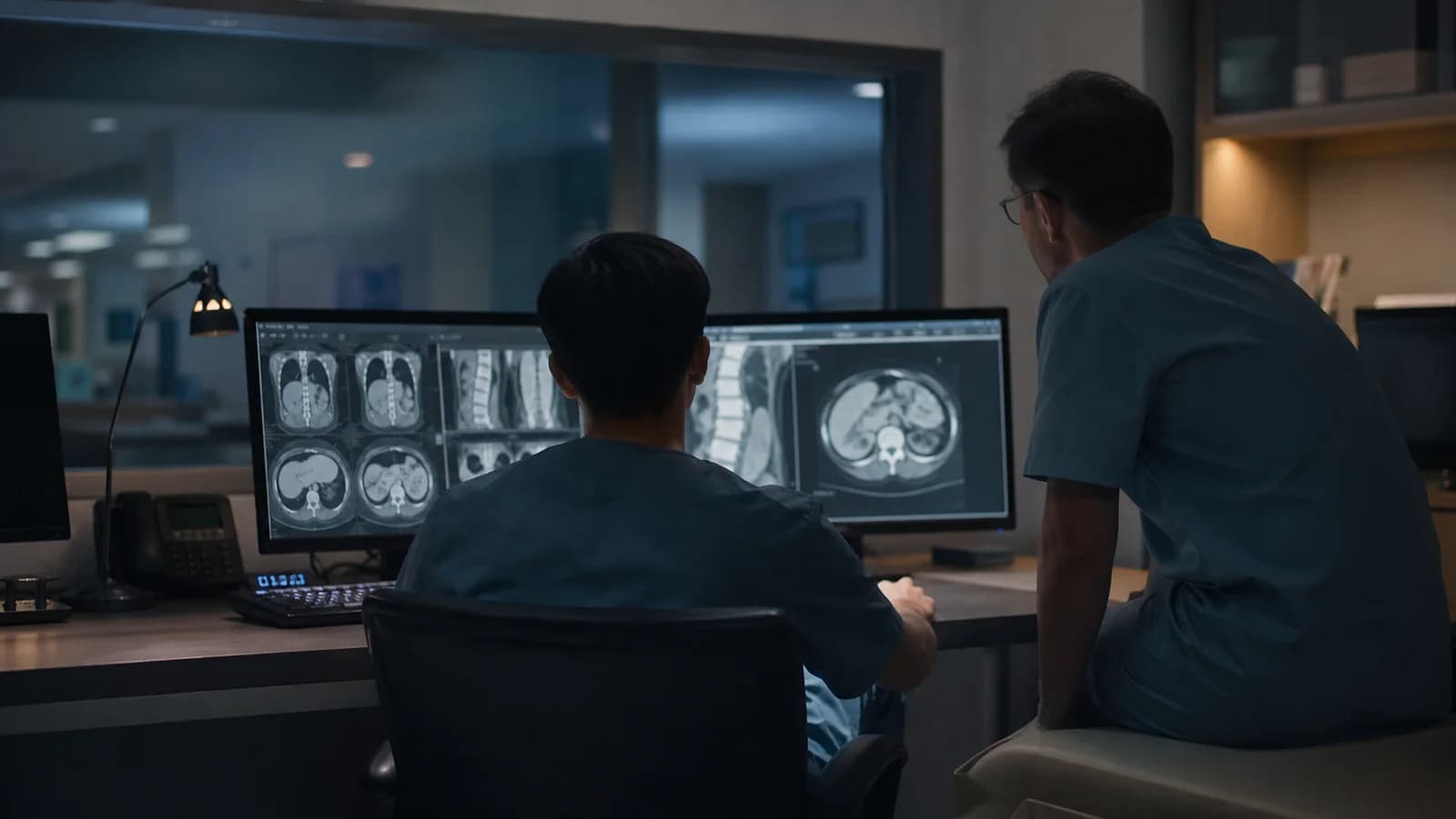
Use this pack to organize your local on-call workflow and keep reporting resources within reach. It brings together existing RadPhrases guides; it does not assign clinical responsibilities, replace supervision, or supply findings for an examination.
Download the three-page English starter pack (PDF) (opens in a new tab).
Before the shift
- Confirm which examinations you are expected to report and whether reports are preliminary or final.
- Record the first and backup escalation contacts by role.
- Check access to PACS, RIS, prior studies, reporting tools, and the local downtime procedure.
- Confirm how urgent findings are communicated and how receipt is documented.
- Agree how pending studies, unresolved questions, and outstanding communications are handed over.
Fill these items from your own institution's procedures. The first-call preparation guide explains the questions in more detail.
A blank reporting worksheet
Start by recording the clinical question, examination technique and limitations, comparison, observed findings, and impression. Keep missing information visible rather than inserting an assumed normal statement. Use the first-call reporting guide to work through the structure.
Before signing, ask whether the impression answers the clinical question, reflects any important limitation, and agrees with the findings. Confirm report status and the required level of supervision.
Six examination-specific starting points
| Examination | Resource | What to check before reusing wording |
|---|---|---|
| Chest radiograph | Normal report example | Projection, technical quality, and whether each stated negative finding was assessed |
| Noncontrast head CT | Systematic review and sample report | Complete examination review, indication, comparison, and limitations |
| Brain MRI | Normal-report wording guide | Available sequences and whether the example is a full report or impression wording |
| Abdominal ultrasound | Organ-by-organ report example | Scope of the examination and organs not adequately visualized |
| Contrast abdomen/pelvis CT | Reporting example and limitations | Contrast technique, coverage, and the extent of the supplied example |
| CT pulmonary angiography | Technical quality and reporting checklist | Technical adequacy and whether the report answers the clinical question |
Communication and handover
Use the local communication pathway. Record who received the result, when it was communicated, the method, and any outstanding action. An electronic report being available does not itself establish that a time-sensitive message was received. Read the critical-findings communication guide for the full workflow.
At handover, distinguish completed work from pending examinations, requested reviews, and unconfirmed communications. Keep patient details within approved institutional systems; the printable pack is a preparation and learning worksheet.
Continue in RadPhrases
The public template library lets you inspect examples and copy wording. The accompanying article remains the source for scope and limitations. Some examples contain impression wording only and are labeled accordingly.
“Use this template in RadPhrases” carries the selected example to the Web Report Writer. The writer requires an account and Premium access. Review the example before explicitly appending it to your draft; existing draft text is preserved.
Clinical use note
This content is educational and is not patient-specific medical advice. Every phrase, template, classification result, and recommendation must be verified and adapted by a physician using the complete examination, clinical context, current guidelines, and institutional protocol.
Find the example for your examination
Preview reporting examples and open the accompanying guide before adapting any wording to the complete examination.
Related reporting resources
Browse the other checklists, phrase sets, and systematic approaches in this topic.