
ERS/ATS 2025 Update: A CT-First Approach to Interstitial Pneumonias
A practical radiology review of ERS/ATS 2025 Update: A CT-First Approach to Interstitial Pneumonias, focused on imaging findings, differential diagnosis, reporting points, and...
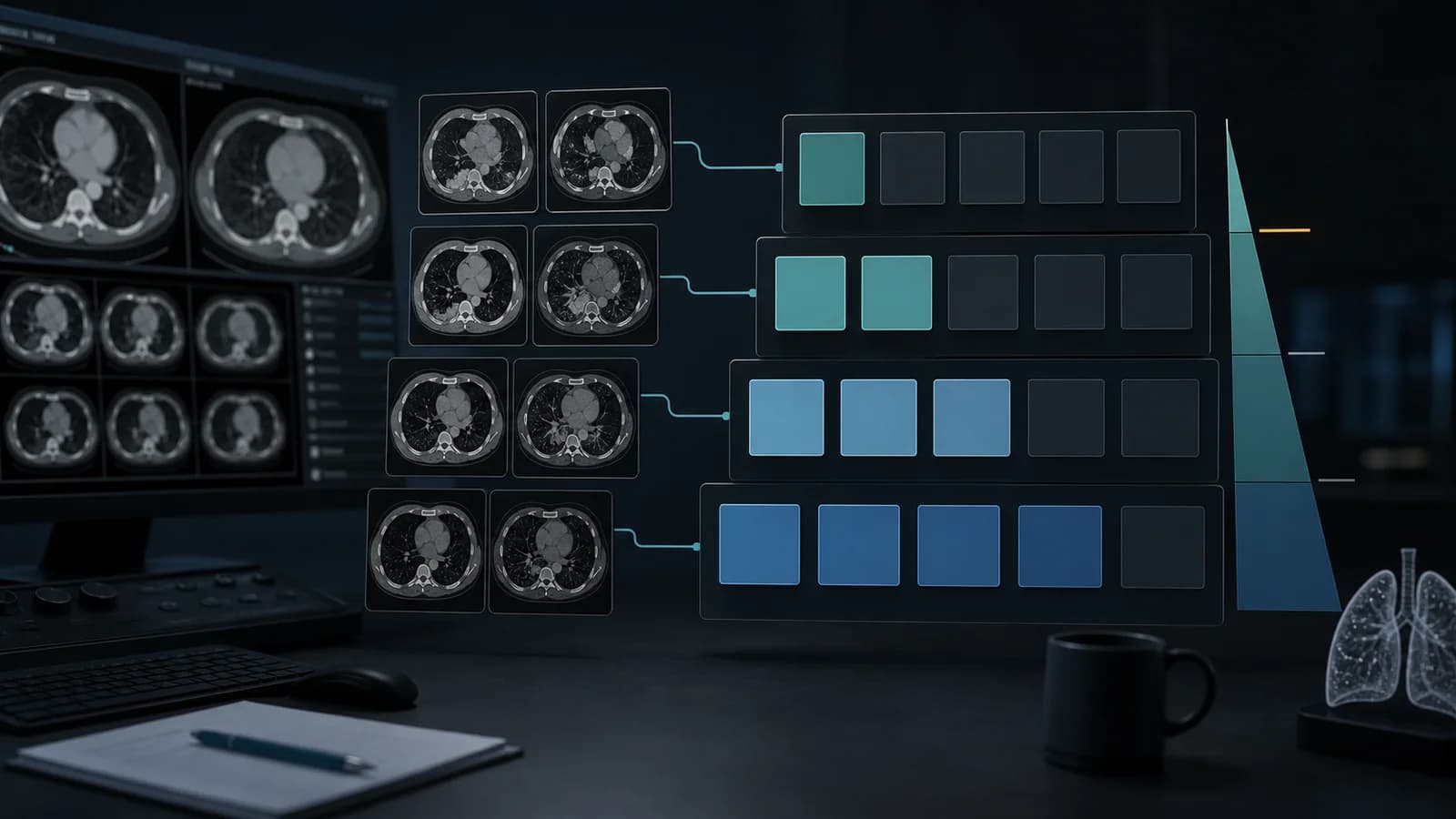
A practical radiology review of ERS/ATS 2025 Update: A CT-First Approach to Interstitial Pneumonias, focused on imaging findings, differential diagnosis, reporting points, and high-yield teaching pearls.
Purpose & Scope
- 2025 ERS/ATS official update (replaces 2013)
- Unifies idiopathic + secondary interstitial pneumonias
- Built on multidisciplinary diagnosis (MDD)
- CT pattern recognition = first step
MAJOR CONCEPTUAL SHIFTS
- No longer “idiopathic-only” → one system for all causes
- Pattern ≠ Diagnosis (e.g. NSIP pattern ≠ idiopathic NSIP)
- Interstitial vs Alveolar filling disorders
- Interstitial → fibrotic vs non-fibrotic
Diagnostic confidence must be stated
- Molecular tools = research only, not routine
INTERSTITIAL PATTERNS (CT-FIRST THINKING)
UIP
- Subpleural + basal
- Reticulation, traction bronchiectasis, honeycombing
- IPF vs CTD-UIP vs HP-UIP
- Probable UIP = no honeycombing
NSIP
- Lower lobes
- Subpleural sparing (key!)
- GG ± reticulation ± traction
- CTD-associated >> idiopathic
- Cellular ↔ fibrotic spectrum
BIP (NEW – MAJOR PATTERN )
- Airway-centred disease
- Mosaic attenuation, air-trapping, 3-density sign
- Seen in HP, CTD, aspiration, drugs
- BIP is a morphological pattern; hypersensitivity pneumonitis remains an etiological diagnosis.
- When appropriate, report “BIP pattern; hypersensitivity pneumonitis favoured” and correlate clinically.
- Idiopathic BIP is a provisional diagnosis of exclusion.
DAD
- Diffuse GG ± consolidation
- Organising → fibrotic phase
- AIP Idiopathic DAD
PPFE
- Upper-lobe pleural fibrosis
- Volume loss, platythorax
- Often combined with UIP/NSIP/BIP
LIP
- Thin-walled cysts + GG
- Mid–lower lungs
- Often secondary (CTD, immune deficiency)
ALVEOLAR FILLING DISORDERS
Organising Pneumonia (OP)
- Patchy consolidation
- Reversed halo, perilobular pattern
RB-ILD
- Upper-lobe centrilobular GG nodules
- Smoking-related
AMP (NEW TERM, alveolar macrophage pneumonia)
- DIP Alveolar Macrophage Pneumonia
- Diffuse/patchy GG ± emphysema
- Smoking common
Rare AFPs
AEP / CEP
PAP
- Lipoid pneumonia
COMBINED & UNCLASSIFIABLE
- Mixed patterns common (e.g. UIP + PPFE)
- Unclassifiable ILD = no dominant pattern or low confidence
DIAGNOSTIC CONFIDENCE (MANDATORY)
- Confident ≥90%
- Provisional 51–89%
- Unclassifiable <50%
- Apply to CT, pathology & final MDD
RADIOLOGY REPORTING RULES
- Name the PATTERN
- Add favoured diagnosis + DDx
- State confidence level
- Acknowledge evolution over time
ULTRA–HIGH-YIELD TAKEAWAYS
- Describe the BIP morphology and separately state when hypersensitivity pneumonitis is the favoured cause.
- Pattern-based CT thinking is now central
- Confidence + clarity > definitive labels
- This framework aligns imaging, pathology & therapy
Non-fibrotic BIP
- Diffuse centrilobular ground-glass nodules
- Airway-centred distribution
- No traction bronchiectasis or fibrosis
- Think: inflammatory / early HP-type BIP
Fibrotic BIP
Three-density sign (mosaic attenuation)
- ⬆ Increased density (inflamed lung)
- Normal lung
- ⬇ Decreased density (air-trapping)
- Reticulation + traction bronchiectasis
- Scattered cysts (often lower lobes)
- This morphology may be described as a fibrotic BIP pattern; hypersensitivity pneumonitis can be stated separately as the favoured aetiology when supported.
Clinical use note
This content is educational and is not patient-specific medical advice. Every phrase, template, classification result, and recommendation must be verified and adapted by a physician using the complete examination, clinical context, current guidelines, and institutional protocol.
Build the category and report statement together
Use the relevant RadPhrases calculator, then verify the result against the official guideline and the complete examination.
Related calculators
Browse the other checklists, phrase sets, and systematic approaches in this topic.